We all know very well that a diesel engine is more economical than a petrol engine. But not everyone knows why. Today we will look into this issue, and we will start with the theory: what is the efficiency factor and why it can be different.
Ideal and actual
The first thought that comes to mind when asked about efficiency is usually obvious and correct: diesel efficiency is higher, which means it is more economical. The main reason really lies in this statement – it is a fact. But then the difficulties begin, because not everyone can explain the higher efficiency of diesel. And this is not surprising, because this is a rather complex issue, which is very difficult to understand without the basics of thermodynamics and the theory of internal combustion engines. We will try not to delve into the jungle of the theory of isentropic compression, isochoric and isobaric heat supply, but we will have to remember the main things.
The internal combustion engine is a heat engine, so its efficiency is usually understood as the thermal efficiency, that is, the ratio of the cycle work to the amount of heat supplied to the working fluid in the cycle. However, for a more complete assessment of the efficiency of engines, other efficiencies are also used: relative internal efficiency, indicator, mechanical and effective efficiency. Together, they provide a more complete understanding of the difference in the efficiency of diesel and gasoline engines. The latter, effective, is especially important, but we will start with the basics – with thermal efficiency.
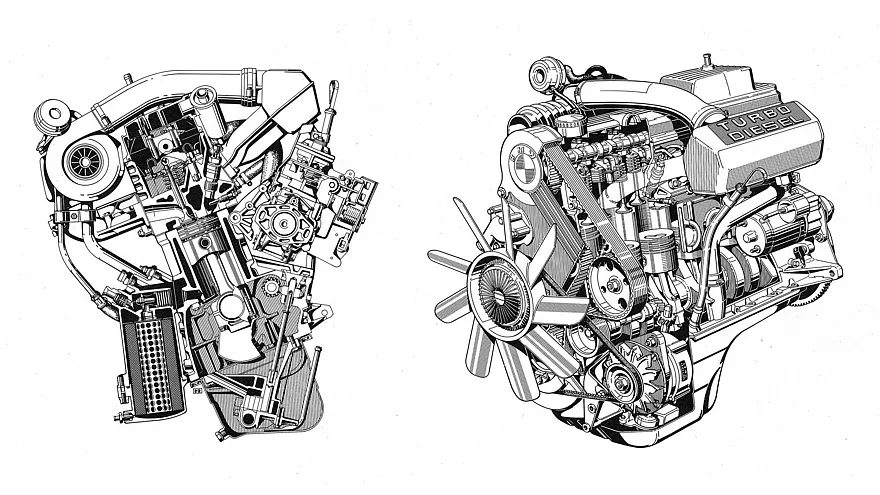
The formula for calculating thermal efficiency is simple: the work of the cycle divided by the amount of heat supplied to the working fluid in the cycle. That is, the efficiency will be higher, the more work is done per unit of heat expended. Of course, heat is taken from the burning fuel, so the most important conditions will be the parameters of the combustion process: it is necessary that more heat is released in one cycle. And for this, the speed and completeness of fuel combustion are important. Gasoline and diesel fuel burn differently. In gasoline engines, combustion occurs with preliminary mixing with the flame front. That is, a homogeneous fuel-air mixture begins to burn from the spark plug spark, then through the flame front throughout the combustion chamber. It turns out quickly, but in a serviceable engine it does not reach detonation (or rather, it should not). Another type of combustion is typical for diesel – diffusion combustion, in which while one part of the fuel is already burning and the gas volume is expanding, the subsequent combustion of the rest of the fuel begins. The features of diesel fuel and gasoline are important here: if in the first case the fuel should be difficult to ignite and have a low boiling point (to reduce the risk of detonation), then in the second case it should boil at a higher temperature, but be more flammable. In life, this is true: diesel fuel has a higher boiling point than gasoline, but at the same time it is more flammable: the autoignition temperature of diesel fuel is about 265 degrees, gasoline mixture – about 280. Of course, all this is relevant only when working in an engine, taking into account the conditions that arise during strong compression in the cylinder and the current enrichment or depletion of the gasoline fuel-air mixture.
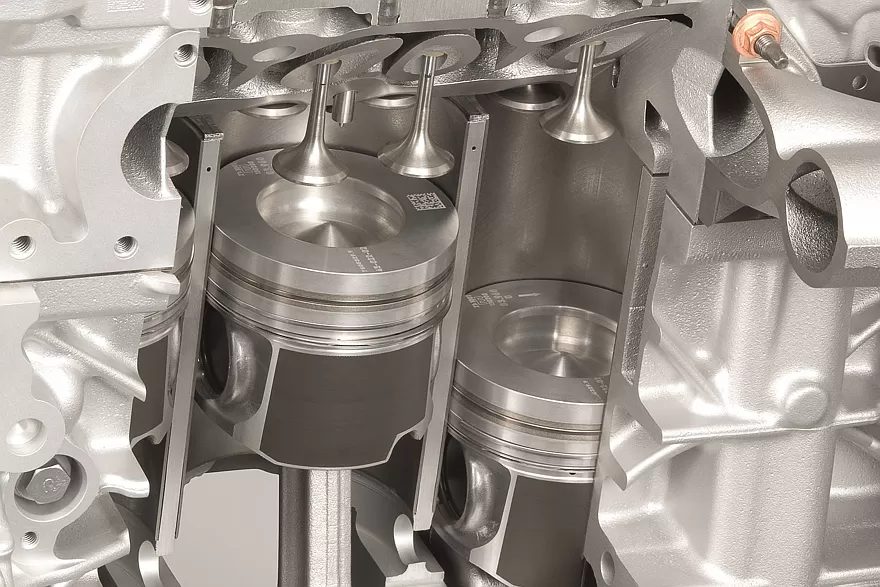
Now let’s remember that the efficiency of fuel combustion directly depends on two parameters: the completeness of its combustion and the degree of compression (more compression – more return of gas expansion energy). Theoretically, a gasoline fuel-air mixture burns more completely due to its proximity to stoichiometric, that is, due to a sufficient amount of oxidizer for combustion (oxygen), while a diesel engine runs on a very lean mixture. In addition, the gasoline mixture is ignited by a spark plug after mixing, and this is very important for combustion at a constant volume. With a diesel engine, everything is exactly the opposite: its diffusion combustion is slower due to the fact that diesel fuel is injected into the air compressed at the end of the injection stroke, and not as a ready mixture. And since combustion is slower, a significant share of it occurs during the period when the piston is already moving down. It would seem that a petrol engine should have a higher efficiency, but no: the diesel engine is helped by an almost twofold superiority in the compression ratio, which negates all the advantages of a petrol engine in terms of the combustion rate of a more homogeneous mixture. And perhaps this is precisely due to what was said above: air is compressed in the cylinder of a diesel engine, not the mixture, and diesel fuel is supplied at the end of the compression stroke. As a result, the thermodynamic efficiency of a diesel engine is significantly higher than that of a petrol engine. But this is only the tip of the iceberg, and it can only be seen in an ideal engine existing in an ideal world.
Some more coefficients
Now let’s talk a little about the other efficiencies that are used to evaluate the effectiveness of engines. The first of them is the relative internal efficiency. You probably know that such concepts as an ideal gas or a stoichiometric mixture (that is, also ideal, containing exactly the amount of oxygen that is necessary for complete combustion of the fuel) are often used for calculations in thermodynamics. As a rule, these calculations do not take into account some leaks in the combustion chamber (or rather, they neglect them as insignificant), do not take into account changes in heat removal due to, for example, a dirty engine or imperfections in the cooling system. It is simply impossible to take absolutely everything into account, so the concept of an ideal thermodynamic cycle was adopted, which takes place in an ideal internal combustion engine.
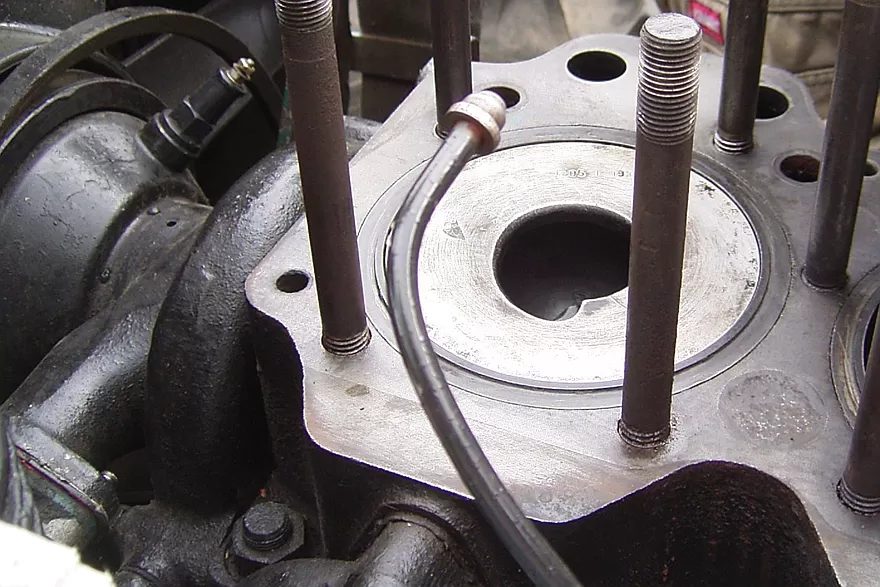
Actually, the same thermal efficiency that we talked about above is also calculated for ideal gasoline and diesel engines, based on their ideal thermodynamic processes. So, the relative internal efficiency shows how close a real engine is to the ideal. More precisely, how close its thermodynamic cycle is to the ideal cycle. It is impossible to establish this efficiency by calculation (testing of live engines is required), but it has been experimentally established that the relative internal efficiency of a gasoline unit is from 0.4 to 0.7, and a diesel unit is from 0.6 to 0.8 (or 40-70 and 60-80%, respectively). To put it simply, a diesel engine is more perfect in its processes than a gasoline engine – it is less dependent on difficult-to-take-into-account factors, which makes it a little more “ideal”.
The indicated efficiency is obtained by adding the thermal efficiency and the relative efficiency. By and large, this parameter describes how much power a real engine produces per unit of specific heat of combustion of its fuel. Well, since we have already established that both of these efficiencies are higher for a diesel engine, their sum will be greater than that of a gasoline engine.
But the mechanical efficiency, which takes into account the power loss to overcome the friction forces in the engine and the costs of driving the attachments, is approximately the same for diesel and gasoline engines – about 0.8 (or 80%).
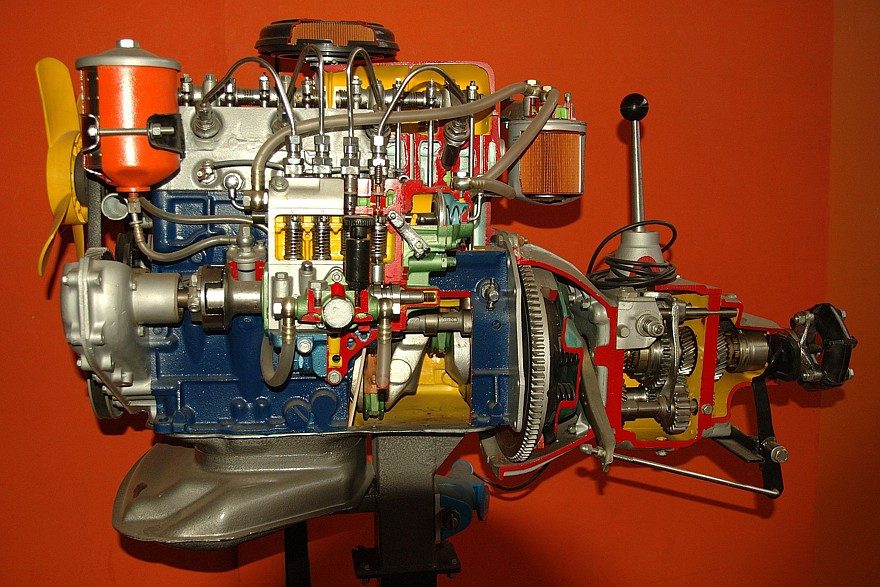
Well, finally, we got to the effective efficiency (or economic efficiency). This is the parameter that takes into account all the previous efficiencies and reflects the ratio of effective power to the thermal power of the fuel. In a somewhat simplified form, it can be represented as the product of the indicator and mechanical efficiency, and it is this value that is usually cited as the classic efficiency indicators of internal combustion engines. Of course, they are different for different engines, but on average, for a gasoline engine, this efficiency is 0.30 (or 30%), for a diesel engine – within 0.45 (45%). As a result, we can say that a diesel engine will always be 10-15 percent more economical than a gasoline engine: by this amount, it produces more power per unit of burned fuel both in theory and in practice. But you can say this, but it will not be the absolute truth.
Not only Otto
Technology does not stand still, and, oddly enough, the physics of engines also changes. Everything we talked about above, in terms of gasoline engines, applies only to those that operate on the Otto cycle. But many modern engines in idle mode or minimum loads operate on the Miller cycle, and in some other modes – on the Atkinson cycle. Why?
The reason is that in their quest to make the engine as efficient and environmentally friendly as possible, engineers have encountered the fact that in unloaded modes, the efficiency of gasoline volumetric engines has begun to seem unacceptably low. Their throttle losses, that is, losses that occur when air enters at a minimum throttle opening, rapidly increase. Here, turbulence becomes abnormally high, and air friction is too great. Diesel engines do not have this problem due to the absence of the throttle valve itself, but something had to be done with gasoline engines. Moreover, the larger the engine volume, the greater the throttle losses, so the right step would be to reduce the engine volume without reducing its power. How? By using a supercharger, which is capable of not only increasing the effective compression ratio, but also minimizing throttling losses by reducing the engine volume. As a result, the efficiency becomes higher by 15-20% (and the power – up to 30%) with a smaller engine volume and a wider range of revolutions and loads. However, you can go even further.
If in the Otto cycle all four strokes last the same time, then when working according to the Miller cycle at the moment of compression the intake valve remains open for some time. In this case the filling of the cylinders is worse, the power decreases, but when working without a load this is not critical, and the thermal efficiency increases immediately by 5-7%. The Atkinson cycle has approximately the same physical meaning, although it is implemented in a different, more complex way. However, it can also give an increase in efficiency within 10%. Against this background, the use of two spark plugs in one cylinder, as, for example, Mercedes did, or multi-contact spark plugs for optimal ignition of the fuel-air mixture seems like child’s play. As a result, now they sometimes talk about the efficiency of a gasoline engine within a fantastic 45% or even 50%.
However, this resembles a marketing ploy: in some modes, the efficiency can really become significantly higher, but in power modes, a gasoline engine always operates on the Otto cycle, and its efficiency at the most sensitive moment for the driver does not increase in any way and does not exceed 35% at best. And today, gasoline engines use incredibly advanced direct stratified injection systems, in which the injectors very accurately distribute the fuel throughout the combustion chamber, which helps to prepare the most homogeneous fuel-air mixture. There is also separate direct injection, which provides for one or more injections with a lean mixture on the intake stroke and an injection with enrichment on the compression stroke, and variable valve timing systems, and variable valve lift systems, and some other technical refinements. And all this is in an attempt to increase the efficiency, which, despite all of the above, is far from the efficiency of diesel engines.
However, diesel engines are not standing still either: it is now impossible to imagine them without supercharging, and fuel equipment that allows you to set up injection almost perfectly is becoming more precise and complex. And yet, it is most likely impossible for Otto engines to catch up with Diesel engines in terms of efficiency. But with the involvement of Atkinson and Miller, something would probably have worked out. If not for the “green agenda”, thanks to which we have to think more often about batteries and electric motors, and not about normal internal combustion engines. However, there is reason to believe that the age of internal combustion engines is not over yet and the battle for efficiency will continue in the near and distant future. We will continue to watch, and with great pleasure.
Let’s sum it up
The answer to the question posed in the title has already been given in the text, but we will formulate it again, briefly and simply. Due to the higher compression ratio and the peculiarity of fuel combustion, a diesel engine requires less fuel to produce the same amount of work due to its higher efficiency. This means that it will always be more economical than a gasoline engine of the same working volume.