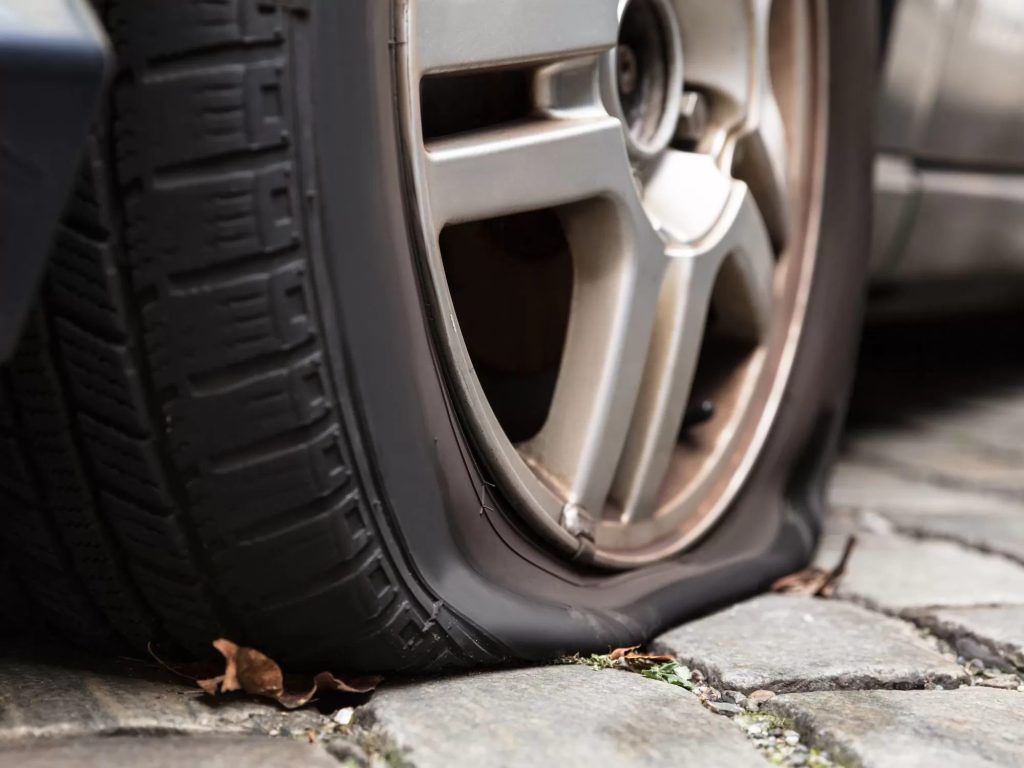
What to do if you have a flat tire and your car does not have a spare tire or it is not suitable for installation? How to install a tourniquet and what to do if there is no tourniquet either? How can a self-tapping screw help in this situation? And, finally, how to find a way out of the situation if you are completely desperate?
Should I remove the nail from the puncture?
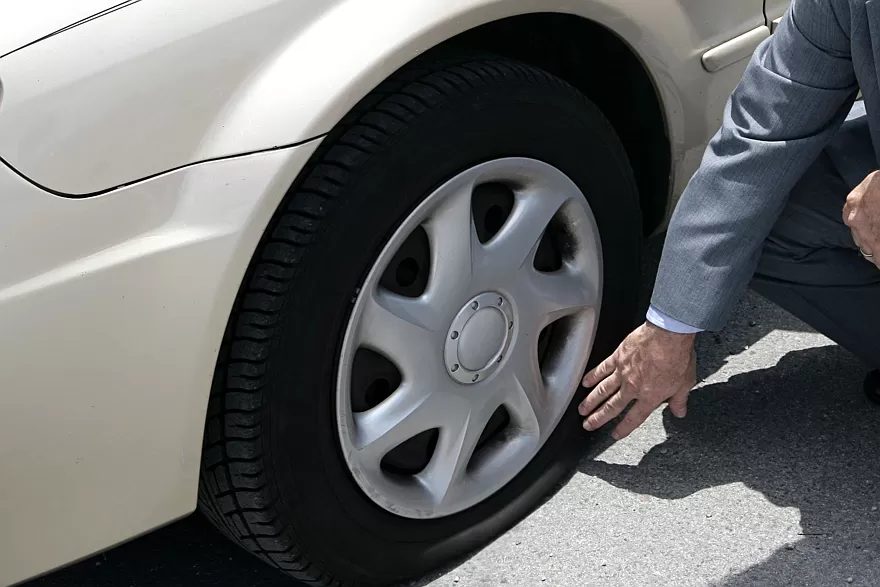
The first thing to do when you find a flat tire is to understand the reason for the loss of pressure. In fact, there are three options: the tire can deflate through the valve (colloquially – the nipple), through a puncture or along the rim. Actually, this is the order in which you should start checking.
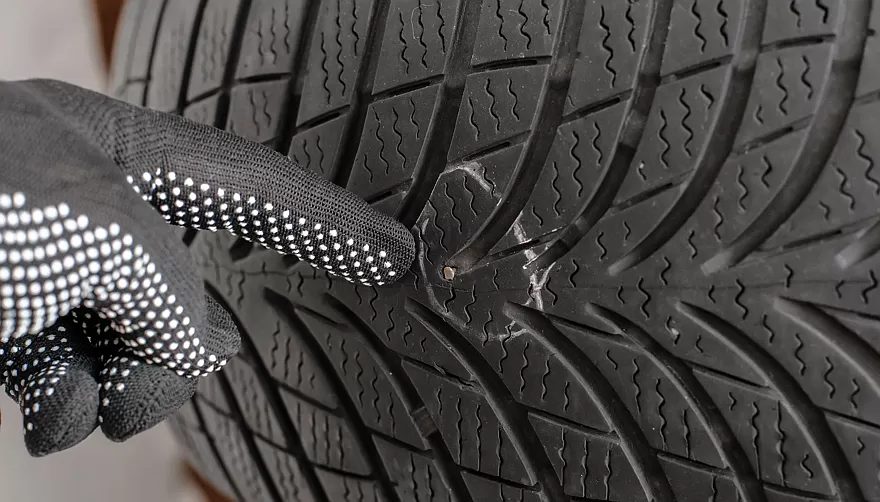
Before looking for a hole in the tire, you need to make sure that the valve holds the pressure. It is easy to check: you can pour water on it or just spit on it. Air bubbles will immediately give away the problem. But usually in this case you can just pump up the wheel and drive to the tire shop. Well, if there are no bubbles, indicating that the valve is working properly, you can move on to looking for a puncture. If a quick inspection does not immediately find a nail, screw or other obvious object sticking out of the tire, you can use the same water to look for a puncture: pour water on the wheel and inspect it for bubbles. If you find a screw or nail, do not rush to take it out: first try to pump up the wheel and check how quickly it loses pressure. The object itself at the puncture site partially seals it, so you can often just pump up the wheel and drive to the tire shop.
The least likely of the “unexpected” options is when the wheel leaks along the rim. This is usually discovered after changing tires – the newly installed tire does not hold the pressure due to corrosion or damage to the disk. However, if you hit a pothole with a wheel at high speed, the disk may become deformed, causing the wheel to leak along the rim.
And one more piece of advice. If you can’t pump up the tire to the desired pressure, try unscrewing the valve core and pumping the tire without it. The resistance at the tire inlet will disappear, and it will be easier and faster for the pump or compressor to increase the pressure. True, then you will have to quickly screw the core back into the hissing valve to maintain the pressure in the tire.
What to do when you find the cause?
If the cause of the puncture is clear, but it is not possible to pump up the wheel, then you can try to repair it. Here, too, there are different scenarios.
There are two options for repairing a tire on the spot using special tools: installing a tourniquet and filling the tire with a special sealant. A tourniquet is one of the most popular options. It is essentially a strip of raw rubber, reinforced with a thread in a high-quality design. The installation kit for the tourniquet also includes an adhesive sealant, an abrasive awl, and a needle with an eye. First, the puncture site is “re-punctured” with an abrasive awl to slightly widen the hole, and then a tourniquet coated with glue is inserted into it using a needle. After inserting the tourniquet into the puncture site, you need to quickly pull out the needle so that the tourniquet remains in the tire. After this, it remains to cut off the end of the tourniquet protruding outward and inflate the wheel.
The second device for quick repairs on the spot is a special sealant. In stores, you can find different types of compounds, both liquid and foam. In any case, the sealant must be poured into the tire through the valve, having previously unscrewed the valve core. After this, you need to rotate the suspended wheel so that the sealant is evenly distributed inside the tire – and then pump up the wheel.
What to do if there is no tourniquet or sealant?
The most severe case is when there is a puncture, but there are no materials to repair it, and there is no store nearby. In this situation, you can try to turn to “folk remedies”. The simplest option is to try to screw a screw into the puncture. The tire will not get any worse, and the screw gives the chance to partially seal the hole, pump up the wheel and get to the tire shop. If a nail or screw is already sticking out at the puncture, but does not want to hold the pressure, you can screw a larger screw in its place. Where can I get a screw for “repair”? For example, unscrew it somewhere in the car, and then put it back in place.
If you don’t have any screws at hand and the puncture is small, there is another “folk recipe”: pour water into the tire through the valve. It should act as a “sealant”, evenly distributing inside the tire during movement and reducing air leakage. Of course, you shouldn’t expect reliability from this method, but sometimes you can drive to a tire shop at low speed. And this method will not cause any harm, even if it turns out to be unsuccessful.
If you have neither the desire, nor the means, nor the skills to fix the puncture, you can resort to outside help. For example, a complicated and dirty, but working option is to remove the wheel and take it by taxi to the nearest tire shop, and then back. A simpler and cleaner option, but more expensive, is to call a tow truck and take the car to the tire shop as a whole. And the third, simplest option is to use the services of a mobile tire shop and get professional tire repair on the spot with a quality guarantee.